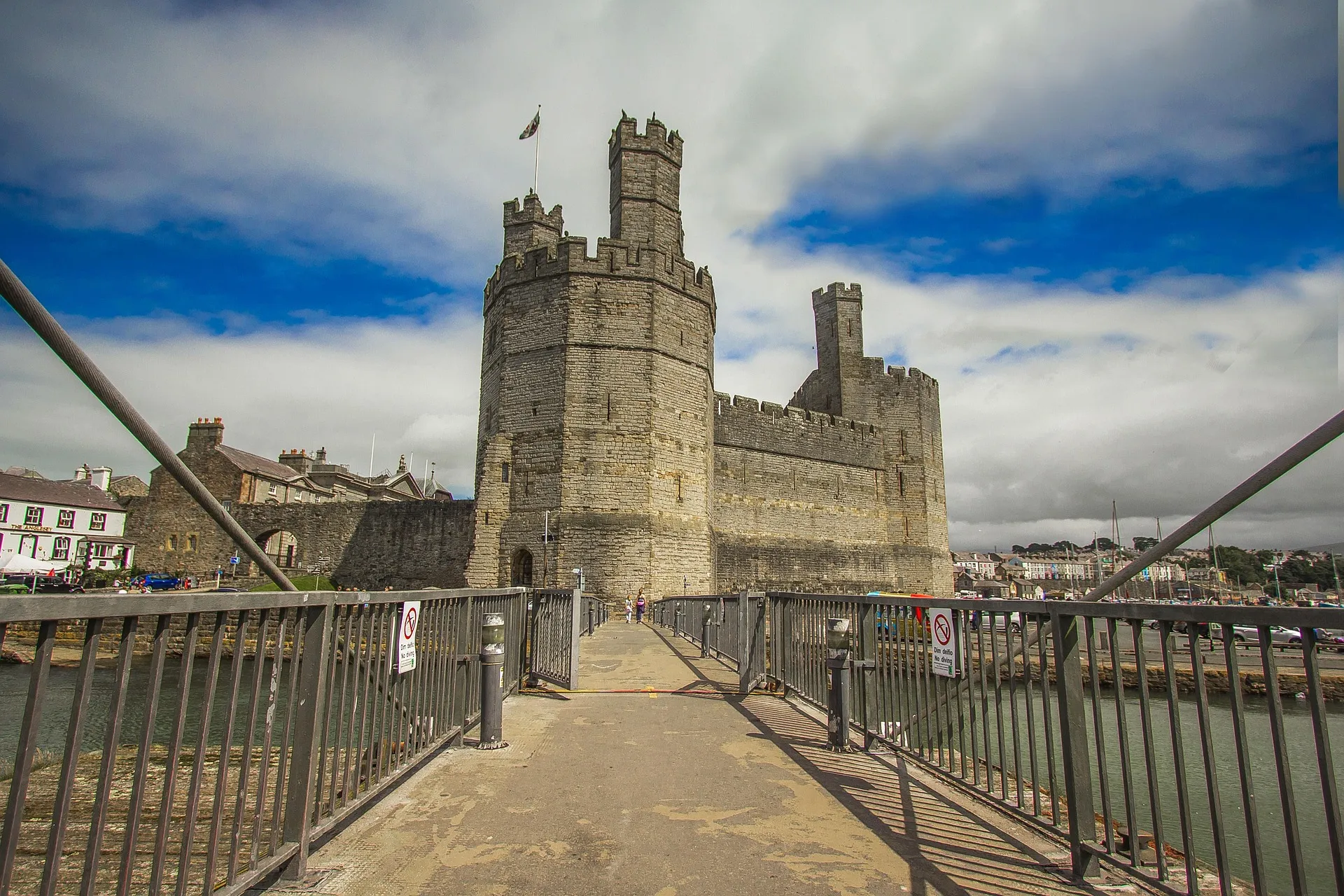
Regional guide
Crypto in North Wales
From Holyhead to Wrexham, the north has its own financial geography — pulled toward Chester and Merseyside, thinly served in the interior, and carrying a crypto fraud problem that the force's own figures make impossible to ignore.
- LL & CH postcodes
- ≈ 700,000 residents
- 0 crypto ATMs
- ≈ £6m lost to crypto scams in three years
Start here
The registered route is an exchange whose UK entity is registered with the FCA under the Money Laundering Regulations and settles GBP over Faster Payments.
- ≈ 700,000
- North Wales population
- 2,228
- North Wales fraud reports, 2023-24
- ≈ £6m
- Crypto scam losses, three years
- 0
- Crypto ATMs verified
North Wales covers roughly 700,000 people across six counties, from the Anglesey ferry port at Holyhead through the Snowdonia interior and along the coast to the border towns of Flintshire and Wrexham. Economically it looks north-east toward Chester, Merseyside and Manchester far more than it looks south to Cardiff, and its financial infrastructure reflects that.
For buying cryptocurrency, none of that geography matters much. What does matter, and matters more here than anywhere else in Wales, is fraud. The figures published by North Wales Police are difficult to read past, and they shape how this page is written.
The problem, stated first
North Wales Police recorded 2,228 fraud reports in the 2023-24 financial year with losses of approximately £1.47 million. Separately, officers have estimated that crypto-related scams alone have cost people across North Wales in the region of £6 million over three years.
The cases the force has chosen to publicise give the texture. A 78-year-old man lost £346,000. A 25-year-old handed over £8,000 after watching a deepfake video appearing to show a senior political figure endorsing an investment. In 2026 police in Wales issued a further warning about recovery scams — approaches to people who have already been defrauded, offering to retrieve their money for an upfront fee.
Nationally, cryptocurrency was the most common commodity in UK investment fraud reports, accounting for around 40% of them. North Wales is not unusual in being targeted. It appears to be unusual in how much is successfully taken.
North Wales in five lines
- No crypto ATMs anywhere in the region, and none that could be lawful in the UK.
- Fraud exposure is the defining local issue — roughly £6m lost to crypto scams over three years.
- Cross-border banking and advice from Chester or Manchester is normal and changes nothing about the rules.
- Coastal towns have workable cash access; Gwynedd and Anglesey interiors are thinner.
- Connectivity can obstruct identity verification in Snowdonia and inland areas — do it once on a strong connection.
The regional picture
Wrexham is the largest settlement, with a county borough population around 137,000, and functions as the region's commercial centre alongside Deeside and the Flintshire towns. It has its own detailed guide. Along the coast, Colwyn Bay, Rhyl and Llandudno form a continuous band of towns with populations in the twenties and thirties of thousands, with a demographic weighted toward older residents. Bangor is small, around 18,000, but carries a substantial university population. Holyhead on Anglesey is the western terminus, with roughly 11,000 people and a port economy.
Between them sits Snowdonia and inland Gwynedd, sparsely populated, poorly connected in places, and among the hardest parts of the UK to reach a bank counter. Welsh branch numbers fell from roughly 695 in 2012 to about 435 by 2022, and Lloyds Banking Group's programme of 49 further closures running into late 2026 has affected communities including in Anglesey, with local reporting describing one town as abandoned.
Cash and banking access
Post Office counters are the backbone here, as across rural Wales. Under the banking framework agreement, most UK banks let personal customers pay cash into their accounts at a Post Office using a card or paying-in slip, and coverage is better than bank branch coverage across the north. Where a community loses its last branch, LINK assesses the need for replacement provision and can commission a shared banking hub.
Once money is in an account, the rest is standard: a Faster Payments transfer to a registered exchange and an order-book purchase. Our cash routes guide ranks every option, and the platform comparison covers where to send it.
Connectivity
Identity verification is the bandwidth-sensitive step — document photographs and liveness video checks both fail more often on a weak connection, which is a genuine frustration in Snowdonia, inland Gwynedd and parts of Denbighshire. Complete the verification once on the strongest connection available to you and it does not need repeating. Transfers and order entry afterwards need almost nothing.
The cross-border question
A large share of north Wales residents bank, work and take professional advice across the English border. For crypto that is entirely fine and occasionally an advantage.
Financial services regulation is reserved to the UK Parliament, and the FCA supervises firms across England and Wales identically. HMRC's cryptoasset treatment is UK-wide because taxation is not devolved. Bank policies on crypto payments are institution-level, not regional. So a Wrexham resident with a Chester-administered current account faces exactly the rules described throughout this site.
Where the border helps is professional services. Finding an accountant with genuine cryptoasset experience is easier in Chester or Manchester than anywhere in north Wales, and there is no reason not to use one. Ask whether they have prepared Self Assessment returns involving pooled-cost calculations for cryptoassets — a vague answer means keep looking.
The verdict for north Wales
Access is fine, infrastructure is patchy in the interior, and the fraud environment is the real story. If you take one thing from this page, take the habit of verifying the legal entity of any firm on the FCA Register before sending money, and of telling one uninvolved person before any significant transaction.
Our scams page covers the current approaches in detail, and the Wrexham guide goes into the region's largest town.
Verify the firm before you send anything
North Wales has lost more to crypto fraud per head than anywhere else in the country. Two minutes on the FCA Register is the highest-value check available.
Questions
North Wales: your questions
Are there crypto ATMs anywhere in north Wales?
No. Our audit found no verified machine in Wrexham, Bangor, Llandudno, Colwyn Bay, Rhyl or Holyhead. The nearest historic listings were across the border in Chester and Merseyside. No UK operator holds the FCA registration required, so any machine encountered is unregistered. See the Wales-wide audit.
Why is crypto fraud so bad in north Wales?
Officers estimate crypto-related scams have cost people in North Wales around £6 million over three years, on top of 2,228 fraud reports and roughly £1.47 million in losses recorded in 2023-24 alone. Publicised cases include a 78-year-old who lost £346,000 and a 25-year-old who lost £8,000 after a deepfake video. The likely drivers are an older population profile, scarce local advice and the loss of branch counters where an unusual payment might be questioned.
Does it matter if I bank in Chester?
Not for crypto purposes. FCA rules, HMRC treatment and bank crypto policies are all set nationally. A Chester branch and a Bangor branch of the same bank follow identical rules. Using English professional services is also perfectly normal for north Wales residents and often more practical than travelling to Cardiff.
How is cash access across the north?
Variable. The coastal towns retain reasonable Post Office coverage; the Gwynedd and Anglesey interiors are thinner, and Lloyds Banking Group closures running into late 2026 have affected communities including in Anglesey. Post Office counters handle most banks' personal cash deposits, and LINK can commission shared banking hubs after a last-branch closure. See cash routes.
Is broadband a problem for verification?
It can be in Snowdonia, inland Gwynedd and parts of Denbighshire. Document uploads and liveness video checks are bandwidth-sensitive. Do the verification once on the strongest connection you can reach; everything afterwards needs very little bandwidth.
Where can I get help if I have been scammed?
Report to Action Fraud and to North Wales Police. Tell your bank immediately — some payments can be recalled if reported quickly. And treat every subsequent offer to recover your money as fraudulent: recovery scams targeting previous victims are a documented and active pattern in Wales.
Related guides